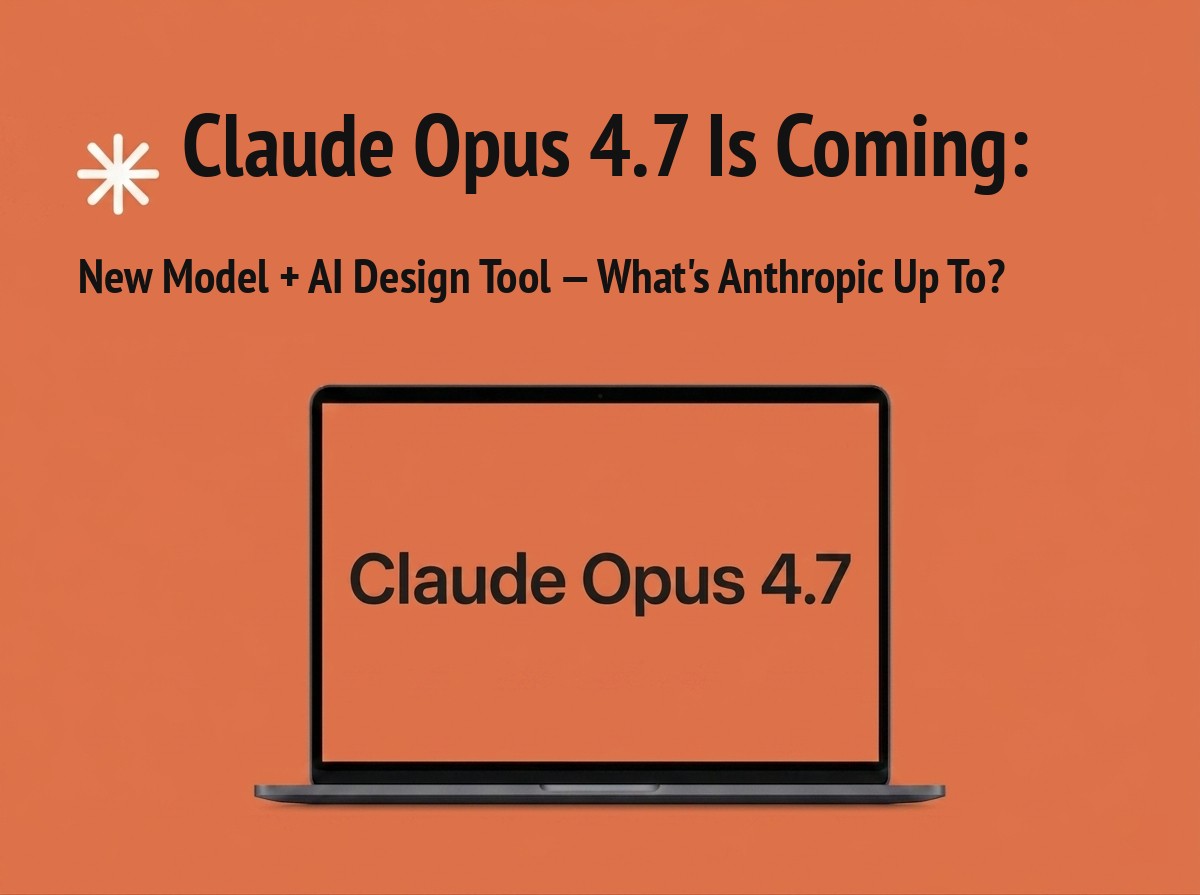
Claude Opus 4.7 Is Coming: New Model + AI Design Tool — What’s Anthropic Up To?
According to an exclusive report from The Information on April 14, Anthropic is simultaneously preparing two major launches: its next-gen flagship model Claude Opus 4.7 and an AI-powered website/presentation design tool — potentially shipping as early as this week. The news instantly rattled markets: Figma dropped 6% that day, with Adobe and Wix following close behind. Here’s the full breakdown.
Opus 4.7: More Than a Version Bump
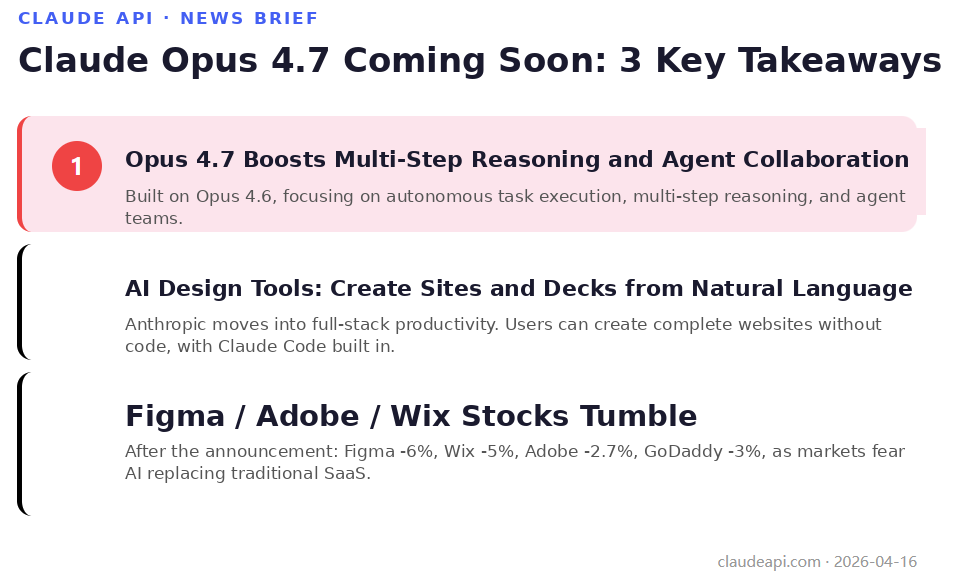
Claude Opus 4.7 is an incremental upgrade built on top of Opus 4.6, which launched in February. Opus 4.6 introduced enhanced coding capabilities, agentic task execution, and a million-token context window. So where does 4.7 push things further?
Based on multiple reports, the key focus areas for Opus 4.7 are:
- Greater autonomy and task completion reliability — The model is more dependable on long-running tasks
- Improved multi-step reasoning — Better at breaking down complex problems and solving them step by step
- Multi-agent collaboration — Anthropic has been experimenting with “agent teams” where multiple AI models work together on different parts of a problem. Opus 4.7 is expected to make this faster and more stable
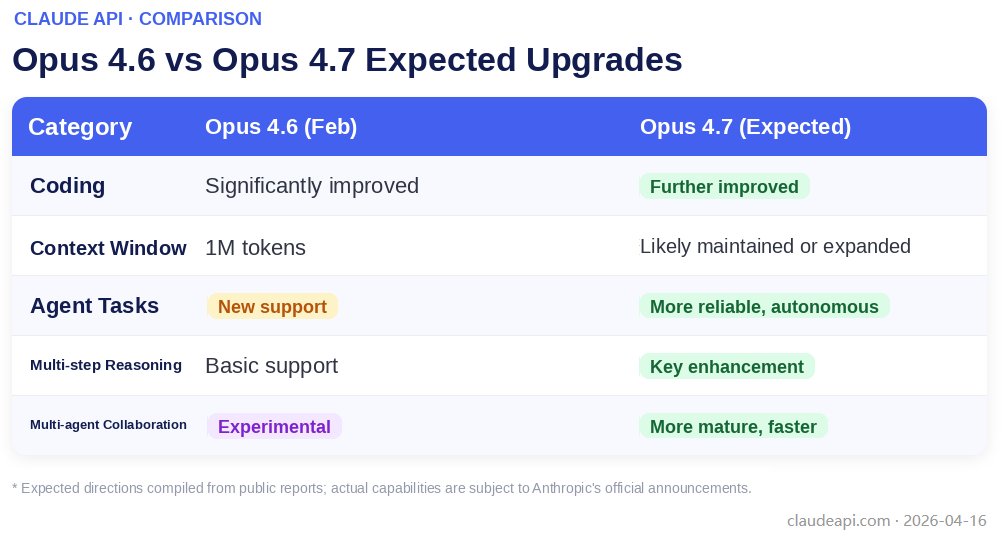
| Dimension | Opus 4.6 (Feb launch) | Opus 4.7 (Expected) |
|---|---|---|
| Coding | Significantly improved | Further refined |
| Context window | 1M tokens | Expected to maintain or expand |
| Agentic task execution | Newly introduced | More reliable and autonomous |
| Multi-step reasoning | Basic support | Major upgrade |
| Multi-agent collaboration | Experimental | More mature and faster |
The above is based on public reporting and may not reflect final specs. Refer to Anthropic’s official announcement for confirmed details.
One important note: Opus 4.7 isn’t even Anthropic’s most powerful model. Reports indicate Anthropic has an internal model called Claude Mythos that hasn’t been released to the public due to cybersecurity concerns. The UK AI Safety Institute found that Mythos can autonomously execute complex cyberattacks at speeds no other model can match. Think of Opus as the public release, and Mythos as the classified one.
The Code Leak: How Opus 4.7 Was Exposed Early
This news wasn’t entirely unexpected. Back on March 31, a Claude Code npm package accidentally shipped with source maps, exposing roughly 500,000 lines of internal TypeScript code.
Buried in the leaked code were:
- Version strings for Opus 4.7 and Sonnet 4.8
- References to the next-gen model family Mythos
- A new tier above Opus called Capybara (analysts estimate pricing could reach $10–15 per million input tokens)
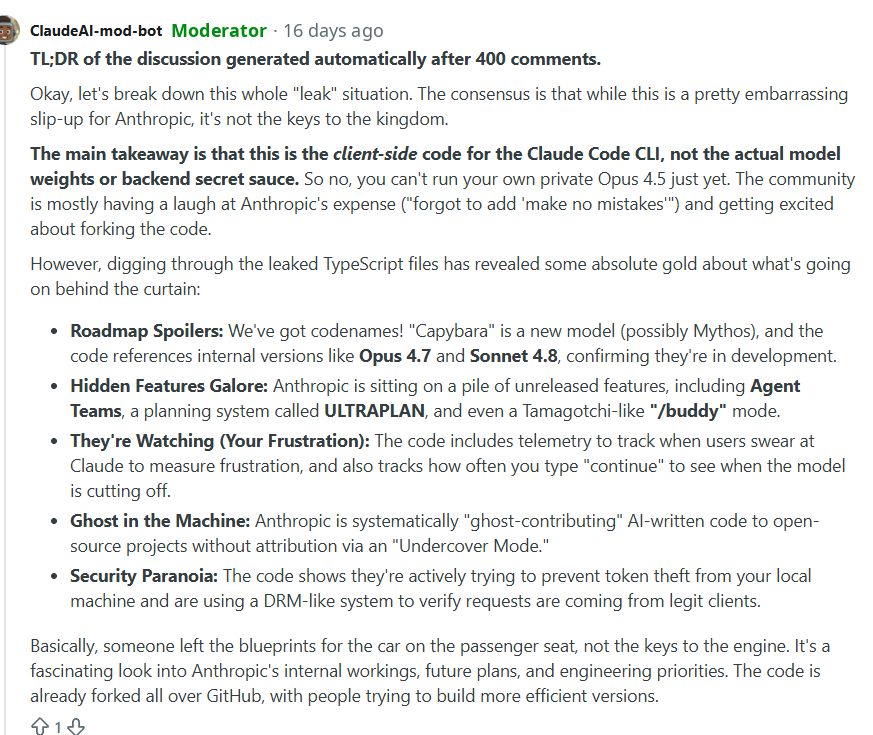
Anthropic has neither confirmed nor denied any of this. But the timeline reported by The Information lines up perfectly with the leaked information.
The AI Design Tool: Anthropic Goes Full-Stack
This might be even more surprising than the model upgrade. Anthropic is about to launch an AI design tool that lets users generate websites and business presentations from scratch using natural language.
Key features of the tool:
- Natural language-driven — Describe what you want, and AI builds it
- Full-stack platform — Not just templates, but fully functional websites
- Claude Code built in — Engineers and non-technical designers share the same workflow
- Built for everyone — No coding required, no Figma skills needed
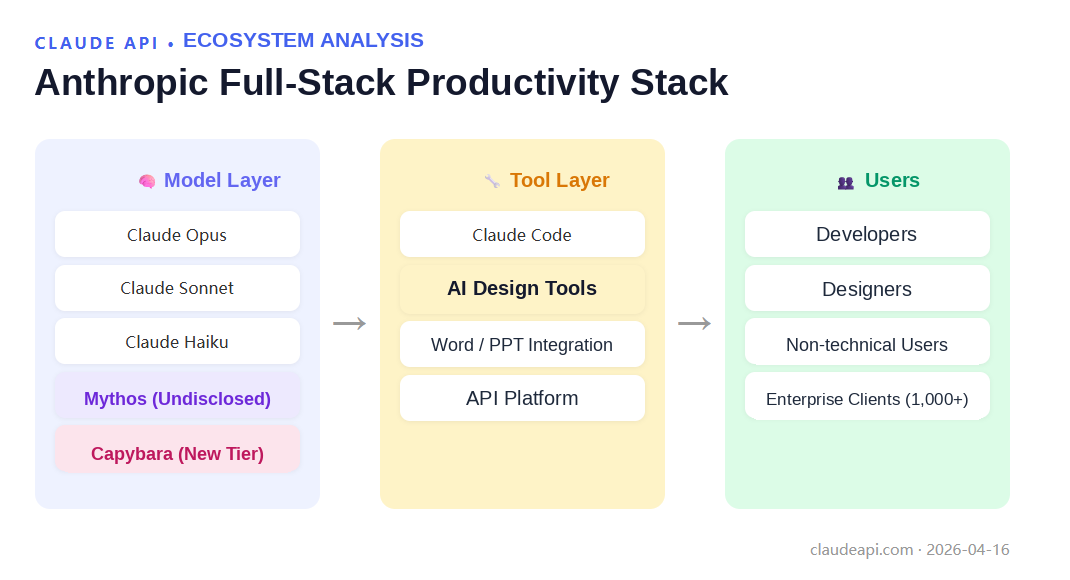
Anthropic has been laying the groundwork here: partnering with Figma to convert AI-generated code into editable design files, and integrating Claude into Microsoft Word and PowerPoint.
Wall Street’s “AI Panic”
The product hasn’t even shipped yet, and Wall Street is already spooked.
| Company | Ticker | Daily Drop | YTD |
|---|---|---|---|
| Figma | FIG | -6% | -51% |
| Wix | WIX | -5% | — |
| Adobe | ADBE | -2.7% | — |
| GoDaddy | GDDY | -3% | — |
Stock data sourced from Yahoo Finance as of 2026-04-16. Prices may have changed.
The S&P 500 Software & Services Index has plunged roughly 26% year-to-date in 2026. The core fear: AI-native tools could directly replace traditional SaaS products.
Anthropic by the Numbers
| Metric | Data |
|---|---|
| Latest valuation | $800B (doubled since February) |
| Annualized revenue | $30B ($9B at end of 2025) |
| Enterprise customers (7-figure+) | 1,000+ (doubled in two months) |
| Release cadence | ~1 major update every two weeks since Jan 2026 |
| Enterprise pricing | $20/user/month base + usage-based billing |
What This Means for ClaudeAPI Users
- New model access — Once Opus 4.7 launches, ClaudeAPI plans to make it available on the platform
- API compatibility — The new model will almost certainly work with the existing API format — just swap the model parameter
- Pricing to watch — With Opus 4.6 priced at $15/$75 per million tokens, Opus 4.7’s pricing is worth keeping an eye on
- AI design tool — If Anthropic opens this via API, ClaudeAPI users could be among the first to benefit
- Multi-agent collaboration — Once agent teams ship officially, enterprise users will unlock entirely new automation possibilities
FAQ
Q: When is Opus 4.7 officially launching? A: According to The Information, as early as this week (April 14–19, 2026). Anthropic has not confirmed an exact date.
Q: Will the API pricing change for Opus 4.7? A: Not yet announced. Opus 4.6 is priced at $15/$75 per million tokens. Check the Anthropic website or ClaudeAPI dashboard for the latest.
Q: Is the AI design tool free or paid? A: No pricing details yet. Given Anthropic’s enterprise pricing model (base fee + usage), the design tool will likely follow a similar structure.
Q: When can we use Claude Mythos? A: Currently limited to select partners. Reports suggest Anthropic’s May event in San Francisco (Project Glasswing) could see a broader rollout, but it’s unclear whether general users will get access.
Want to be first in line for Opus 4.7? Follow the ClaudeAPI blog — we’ll publish setup guides and performance benchmarks as soon as the new model goes live.