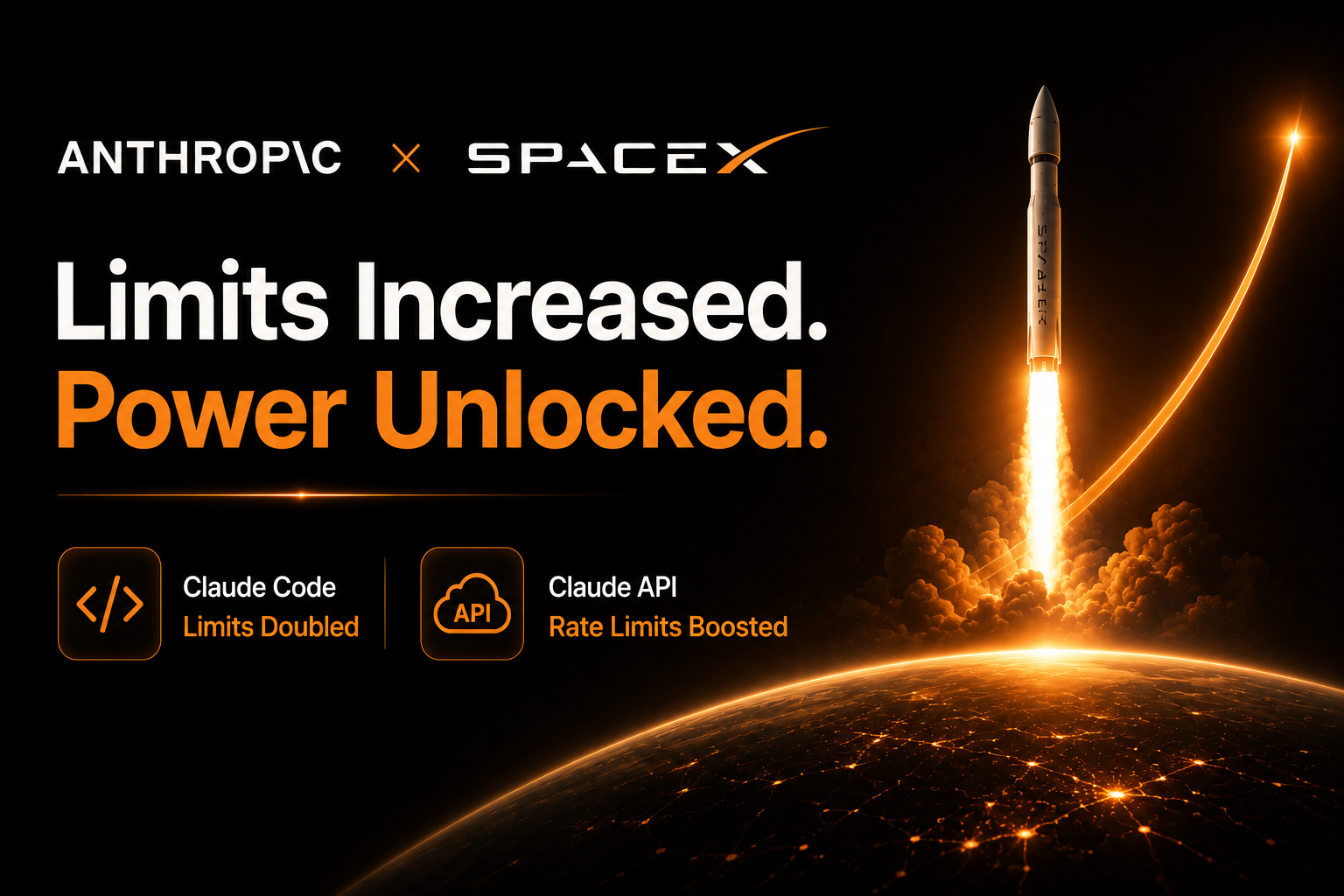
On May 6, 2026, Anthropic announced changes many developers have been waiting for: Claude Code usage limits doubled, Claude API rate limits increased materially, and all updates took effect immediately.
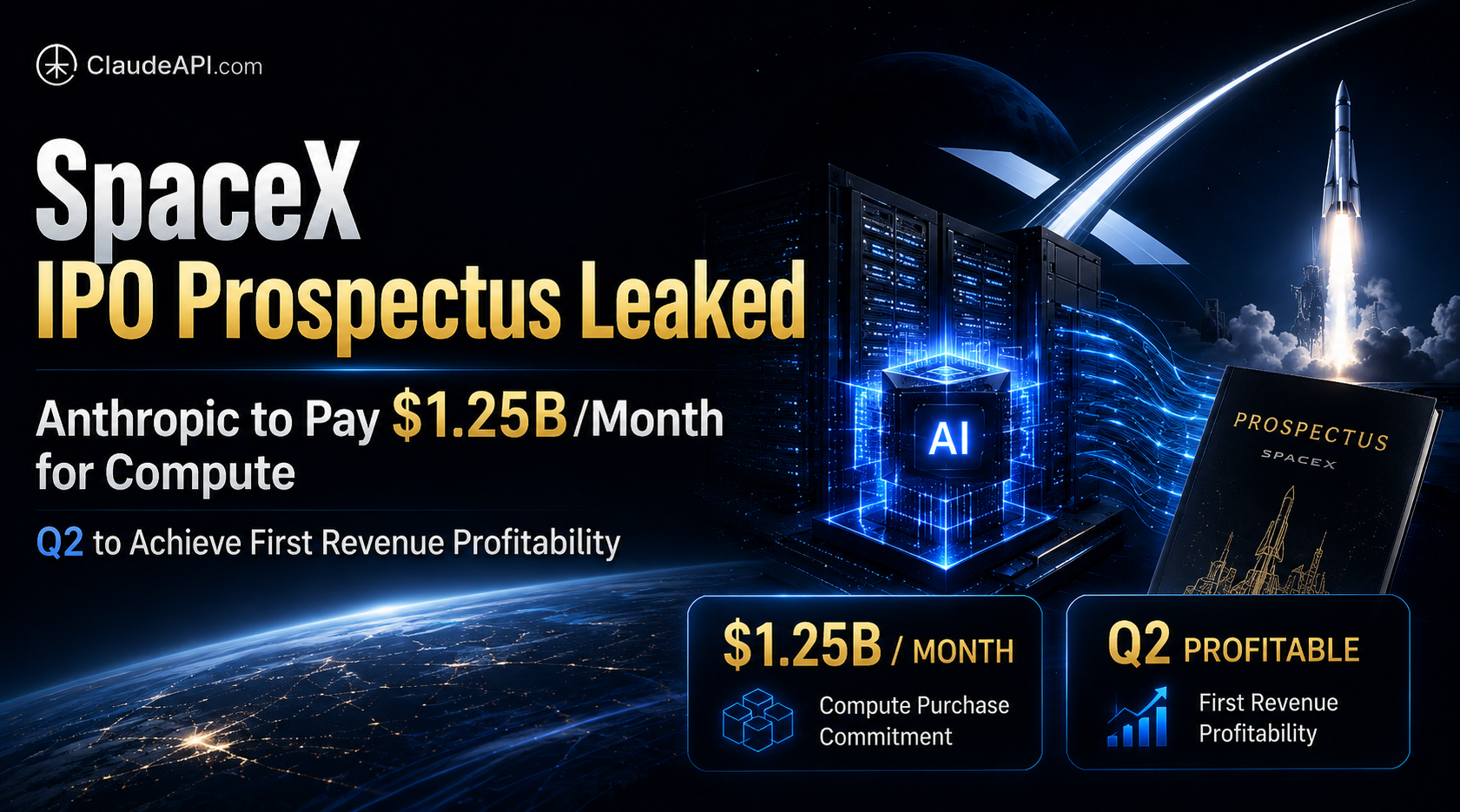
The direct driver is a large-scale compute agreement between Anthropic and SpaceX.

What changed?
Anthropic published three changes that apply right away:
1. Claude Code 5-hour rolling limit doubled
For subscribers on Pro, Max, Team, and Enterprise (per-seat billing), the 5-hour rolling rate limit for Claude Code doubled.
Heavy coding workflows that used to hit the cap quickly—analyzing large repos, running Agent-style loops, or editing many files in parallel—now have more headroom.
2. Peak-hour throttling removed
Previously, Pro and Max users could see extra rate reductions during peak hours (often described as US business hours). Anthropic removed that policy.
For developers in China, this is especially practical: your daytime and evening work often overlaps US peak hours. You may have noticed slower responses or limits triggering sooner; that peak-time penalty is gone.
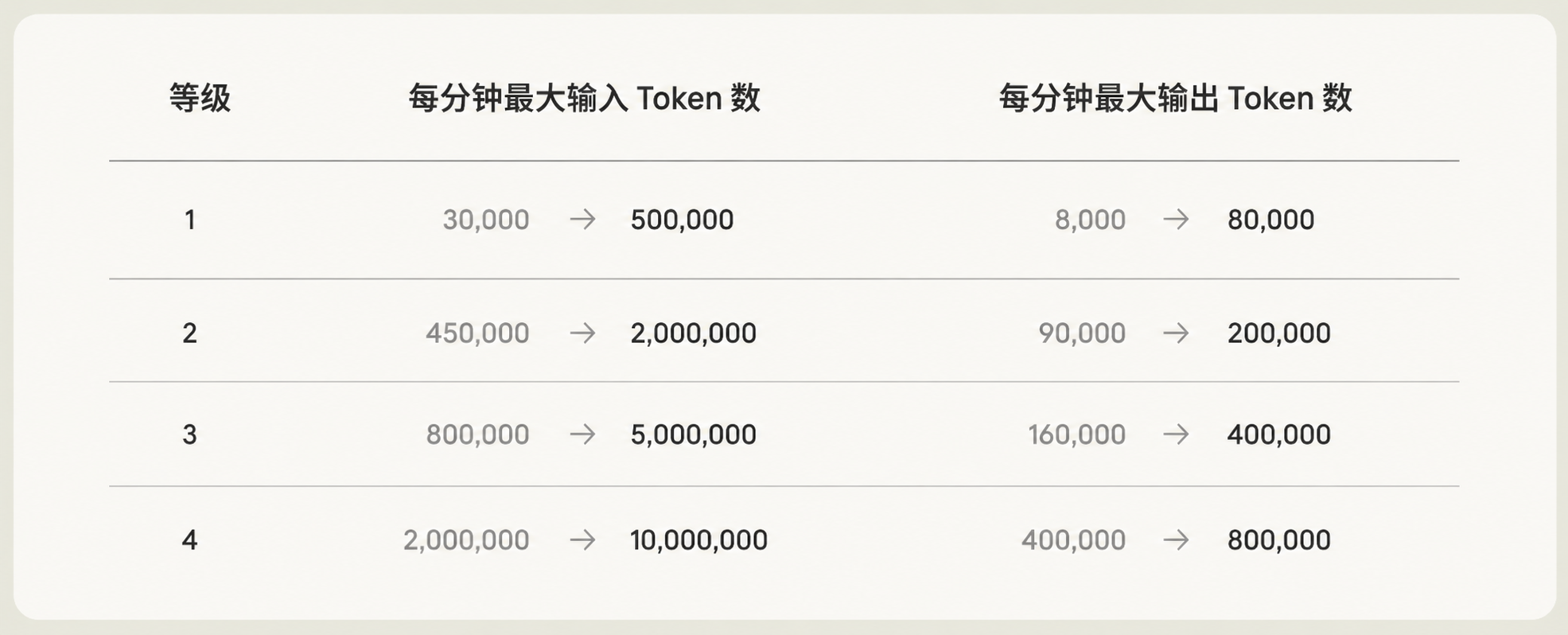
3. Claude Opus API rate limits raised
For flagship models such as claude-opus-4-6 and claude-opus-4-7, Anthropic raised API rate limits (official wording: “considerably”).
Teams running Opus in production for hard reasoning, long documents, or high-quality generation face less pressure when scaling throughput.
Why now? SpaceX Colossus 1 datacenter
The capacity behind these changes comes from Anthropic’s compute deal with SpaceX:
- Site: SpaceX Colossus 1 datacenter
- New capacity: more than 300 megawatts (MW)
- GPUs: more than 220,000 NVIDIA GPUs
- Timeline: brought online within about one month
This is not Anthropic’s first large infrastructure bet. Context from earlier partnerships:
| Partner | Scale (as reported) |
|---|---|
| Amazon | Up to 5 GW; nearly 1 GW targeted online by end of 2026 |
| Google + Broadcom | 5 GW, rolling out from 2027 |
| Microsoft + NVIDIA | $30B Azure capacity |
| Fluidstack | $50B US AI infrastructure investment |
| SpaceX (new) | 300+ MW, 220K+ GPUs, ~one month to integrate |
The step-up from MW to GW signals Anthropic is pre-building infrastructure for large-scale Agent workloads—not only future promises.
What it means for developers
Scenario 1: Long Claude Code sessions interrupt less often
Typical heavy use: multi-file refactors, or tight test → fix → verify loops. When you hit the 5-hour cap, you used to wait; doubling the window makes it easier to finish end-to-end workflows in one stretch.
Scenario 2: Agent pipelines get more breathing room
If you automate with the Claude API—scheduled jobs, report generation, user-facing agents—high concurrency used to mean more 429 rate limits and brittle production behavior. Higher Opus limits improve headroom for those systems (still monitor quotas and errors in your environment).
Scenario 3: Code review and doc generation throughput
Batch tasks (PR review, docstrings, comment generation) are rate-sensitive. Higher ceilings raise the throughput cap for those pipelines.
Scenario 4: No more “wait until US night” for big jobs
For China-based schedules aligned with US peak hours, removing peak throttling means you are less likely to defer large Claude Code jobs to off-peak US time.
Call Claude via ClaudeAPI.com: quick setup
If direct access to the Anthropic API is unreliable from your network, you can route through ClaudeAPI.com—a third-party API gateway, not an Anthropic product. Use the Anthropic SDK with a different base_url and your ClaudeAPI key.
Python (Anthropic SDK)
import anthropic

client = anthropic.Anthropic(
    api_key="your-api-key",
    base_url="https://gw.claudeapi.com"
)

message = client.messages.create(
    model="claude-opus-4-7",   # flagship; Anthropic raised Opus rate limits
    max_tokens=4096,
    messages=[
        {"role": "user", "content": "Analyze performance bottlenecks in this code"}
    ]
)
print(message.content[0].text)
import anthropic

client = anthropic.Anthropic(
    api_key="your-api-key",
    base_url="https://gw.claudeapi.com"
)

message = client.messages.create(
    model="claude-opus-4-7",   # flagship; Anthropic raised Opus rate limits
    max_tokens=4096,
    messages=[
        {"role": "user", "content": "Analyze performance bottlenecks in this code"}
    ]
)
print(message.content[0].text)
Node.js
import Anthropic from "@anthropic-ai/sdk";

const client = new Anthropic({
  apiKey: "your-api-key",
  baseURL: "https://gw.claudeapi.com",
});

const message = await client.messages.create({
  model: "claude-opus-4-7",
  max_tokens: 4096,
  messages: [{ role: "user", content: "Review boundary cases for this function" }],
});

console.log(message.content[0].text);
import Anthropic from "@anthropic-ai/sdk";

const client = new Anthropic({
  apiKey: "your-api-key",
  baseURL: "https://gw.claudeapi.com",
});

const message = await client.messages.create({
  model: "claude-opus-4-7",
  max_tokens: 4096,
  messages: [{ role: "user", content: "Review boundary cases for this function" }],
});

console.log(message.content[0].text);
Claude Code configuration
In your Claude Code config:
{
  "env": {
    "ANTHROPIC_BASE_URL": "https://gw.claudeapi.com",
    "ANTHROPIC_API_KEY": "your-api-key"
  }
}
{
  "env": {
    "ANTHROPIC_BASE_URL": "https://gw.claudeapi.com",
    "ANTHROPIC_API_KEY": "your-api-key"
  }
}
Note: The May 6 limit changes apply to Anthropic subscription / official API products as announced. Gateway rate limits on ClaudeAPI.com follow platform capacity and your plan—check the console for current quotas.
Model picks after the limit bump
| Use case | Model | Why |
|---|---|---|
| Daily coding in Claude Code | claude-sonnet-4-6 |
Fast, lower cost, good for high-frequency turns |
| Architecture / large refactors | claude-opus-4-7 |
Strongest reasoning; Opus API limits raised |
| Doc generation | claude-haiku-4-5-20251001 |
High throughput, low cost |
| Production agents | claude-sonnet-4-6 |
Strong cost/performance with more rate headroom |
Full pricing: ClaudeAPI.com pricing
FAQ
Do doubled limits apply to API keys on ClaudeAPI.com?
Anthropic’s May 6 announcement targets Claude Code subscriptions (Pro/Max/Team/Enterprise) and Anthropic API rate limits for Opus. ClaudeAPI.com is a separate gateway—confirm your quotas and model availability in the console.
Which Claude Code plans get the 2× 5-hour limit?
Pro, Max, Team, and Enterprise (per-seat) as stated in Anthropic’s announcement. Verify eligibility in Anthropic’s current product docs.
Did peak-hour throttling affect API or only Claude Code?
The announcement emphasizes peak-hour limits for Pro/Max Claude Code users. API behavior may still have its own rate tiers—monitor 429 responses and headers in production.
Why does SpaceX matter for developers?
The SpaceX deal adds 300+ MW and 220K+ GPUs at Colossus 1 on a ~one-month integration timeline—capacity Anthropic cites as enabling higher limits now, not only future roadmap slides.
Summary
The signal is clear: Anthropic’s compute build-out is starting to show up in everyday developer limits, not only in long-term press releases.
If you run long Claude Code engineering sessions or depend on Opus in production, it is a good time to re-test workflows you previously avoided because you expected to hit rate limits.
CTA
Get an API key and route the Anthropic SDK to the gateway:
Based on Anthropic’s public announcement; technical figures are from vendor statements. ClaudeAPI.com is an independent gateway—not affiliated with Anthropic. For API access, visit claudeapi.com.