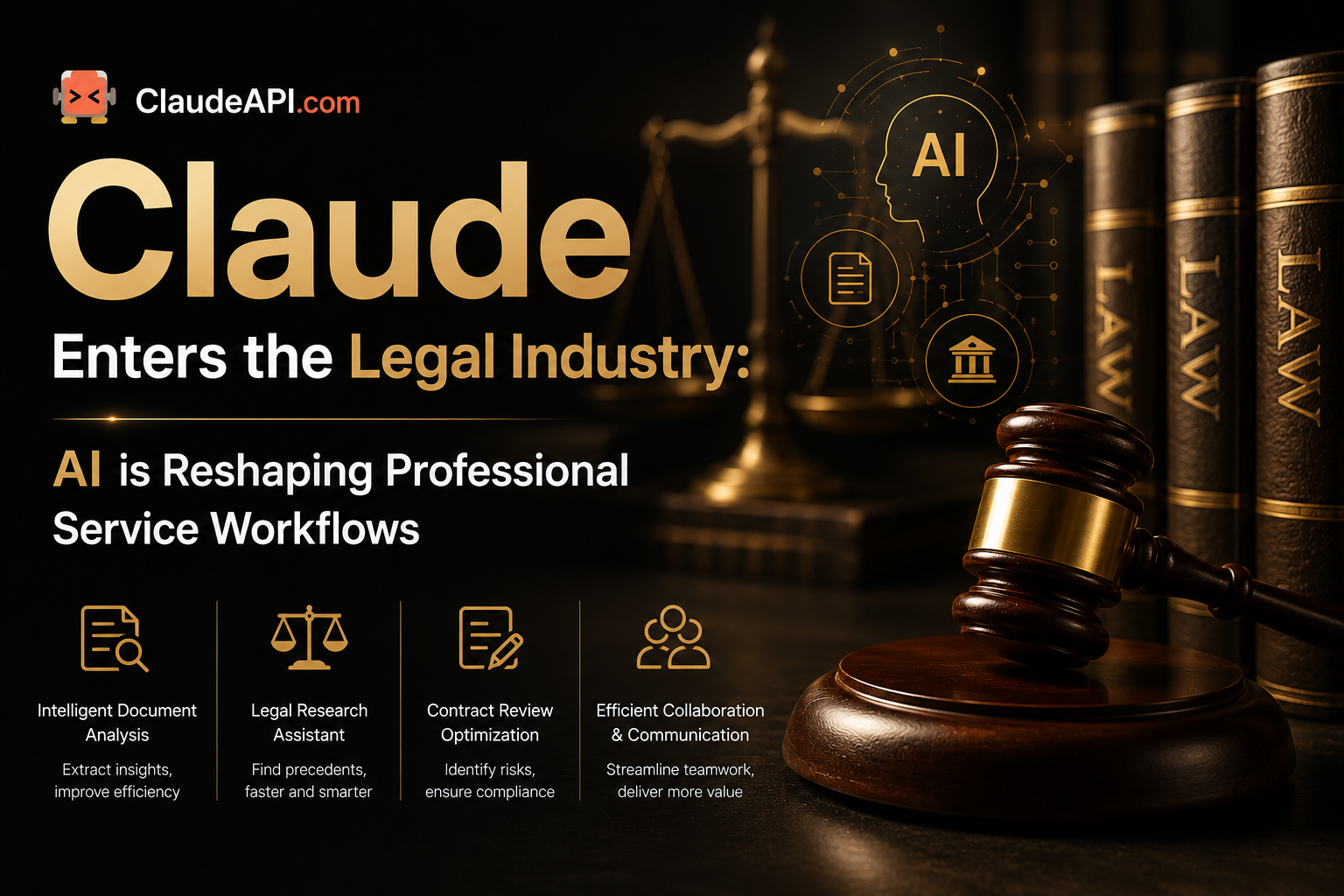
On May 12, 2026, Anthropic sent its strongest signal yet that Claude is moving deep into the legal industry: it announced 20+ MCP connectors and 12 domain-specific legal plugins for litigation, transactions, compliance, IP, legal research, and more.
This is not a minor feature update.
Westlaw, DocuSign, Everlaw, Harvey, Thomson Reuters CoCounsel, iManage, Relativity — put these names together, and you are looking at a near-complete software stack for modern law firms and corporate legal teams.
What Actually Happened?
Before this launch, Claude already had strong reasoning, writing, and document analysis capabilities. But in legal workflows, that was not enough.
Lawyers do not just need a general-purpose chatbot. They need AI that can:
- Search Westlaw
- Pull case files from Everlaw
- Work with document management systems like iManage
- Trigger DocuSign workflows
- Analyze contracts inside existing legal software
- Generate legal work products with proper context and permissions
That is where Model Context Protocol(MCP) comes in.
With MCP, Anthropic is turning Claude from a standalone AI assistant into a workflow layer that can connect directly to the systems legal professionals already use.
This launch has three major parts:
- 20+ platform-level MCP connectors that let Claude read from and interact with legal software systems
- 12 legal-domain plugins with preconfigured workflows for different practice areas
- Open-source engineering infrastructure, including the
anthropics/claude-for-legalGitHub repository with reference agent implementations

20+ MCP Connectors Cover the Core Legal Workflow Stack
Anthropic’s connector lineup spans four major categories of legal work.
Contracts and Document Management
| Platform | What Claude Can Do |
|---|---|
| DocuSign / DocuSign CLM | Check contract status, retrieve executed documents, trigger approvals, and route signature workflows |
| Ironclad | Manage contract lifecycle workflows, create matters, and track deals |
| iManage | Access legal files, matter documents, and work product from a widely used law firm DMS |
| NetDocuments | Work with cloud-based legal document management and collaboration systems |
| Definely | Analyze defined terms, references, and clause relationships inside contracts |
DocuSign is a good example of where this is heading.
Anthropic had already introduced a DocuSign integration inside its Claude-powered work platform. Users could draft agreements in natural language, fill in business details, route documents for legal review, and trigger the signature process — all without leaving Claude.
With MCP, this type of workflow becomes more extensible. Claude can act less like a chat window and more like an orchestration layer across legal tools.
eDiscovery and Litigation Support
| Platform | What Claude Can Do |
|---|---|
| Everlaw | Search case materials, retrieve documents, inspect metadata, and generate reports |
| Relativity | Work with one of the leading eDiscovery review platforms |
| Consilio | Integrate eDiscovery services used by large law firms and enterprise legal teams |
The Everlaw integration is especially important.
Through MCP, Claude can search documents inside an Everlaw project using natural language, retrieve content from specific binders, analyze Bates numbers and metadata, and coordinate multi-step workflows across tools.
For example, a litigation team could ask Claude to plan a document review task, pull relevant materials from Everlaw, and then generate a draft summary or motion outline in another system.
Importantly, permissions remain controlled by Everlaw. Claude can only access the data the user is already authorized to view.

Legal Research and Citation Workflows
| Platform | What Claude Can Do |
|---|---|
| CoCounsel Legal(Thomson Reuters) | Deep Westlaw-powered research across case law, statutes, regulations, and Practical Law content with cited sources |
| Harvey | Legal Q&A, Vault project analysis, and knowledge base research |
| Midpage | Citation verification using legal databases |
| Trellis | State court record research |
| Legal Data Hunter | Research across 160+ jurisdictions and 31 million legal documents |
| Solve Intelligence | Patent research and IP analysis |
The Thomson Reuters partnership is one of the biggest signals in this launch.
The next generation of CoCounsel Legal has been rebuilt on Anthropic’s Claude Agent SDK. It can reason, plan, retrieve authoritative legal content, and adapt its workflow as the task evolves.
Behind that product are massive legal data assets: Westlaw, Practical Law, KeyCite signals, and Thomson Reuters’ legal research infrastructure. Legal professionals can now access that research layer directly through Claude-powered workflows.
M&A and Transactional Work
| Platform | What Claude Can Do |
|---|---|
| Box | Access virtual data room files for due diligence |
| Datasite | Work with M&A-focused virtual data rooms |
For transactional lawyers and legal tech builders, this matters because due diligence is one of the most obvious areas for AI-assisted workflow automation: document collection, issue spotting, disclosure review, red-flag summaries, and closing checklist generation.
12 Legal Plugins: From General AI Tool to Legal Workflow Agent
The 20+ connectors solve the data access problem.
The 12 legal plugins solve a different problem: workflow design.
Instead of giving users a blank chatbot and asking them to write perfect prompts, Anthropic is packaging Claude into practice-specific legal workflows.
The plugins cover areas such as:
- Commercial Legal: contract review, NDA classification, vendor agreement workflows
- Corporate Legal: M&A due diligence checklists and closing process management
- Employment Legal: employment law and compliance reviews
- Privacy Legal: GDPR, CCPA, and privacy compliance workflows
- Product Legal: product terms, launch review, and risk analysis
- Regulatory Legal: support for regulatory filings and compliance work
- AI Governance Legal: AI policy review, model risk, and governance audits
- IP Legal: patent, trademark, and IP document workflows
- Litigation Legal: evidence organization, motion drafting, and case preparation
- Legal Clinic: workflows for law schools, teaching environments, and pro bono support
Several of these plugins — including Commercial Legal, Corporate Legal, Litigation Legal, and Product Legal — also come with “Cookbook” versions that can be deployed through the Claude API as Managed Agents.
That is a big deal for developers.
It means legal tech teams can expose Claude-powered legal workflows as programmable services inside their own products, rather than forcing every customer to build and configure agents from scratch.
Freshfields Shows What Enterprise Adoption Looks Like
Just three weeks before this announcement, global law firm Freshfields announced a multi-year partnership with Anthropic.
The key numbers are worth noting:
- Claude is being deployed to 5,700 employees
- The rollout covers 33 offices worldwide
- It spans all practice groups and business services teams
- Usage reportedly grew by around 500% within six weeks
- Freshfields and Anthropic are co-developing agentic workflows for multi-step legal tasks
Freshfields is also an early tester of the next-generation Thomson Reuters CoCounsel Legal product, which is being rebuilt with Anthropic’s latest agent technology and embedded Westlaw / Practical Law access.
The message is clear: a top-tier global law firm is not treating Claude as an experimental chatbot. It is positioning Claude as firm-wide AI infrastructure.
What This Means for Developers Building Legal AI Products
For developers working with Claude API, this launch creates several immediate opportunities.
1. Connect Claude to Legal Data Systems with MCP
You no longer need to build every integration from scratch.
With Anthropic’s MCP connectors, Claude-based agents can connect to systems like DocuSign, Everlaw, iManage, Box, and legal research platforms. Once users authorize access, Claude can call the right system at the right point in the workflow.
For legal SaaS teams, this can dramatically reduce integration complexity.
2. Deploy Legal Workflows as Managed Agents
The Cookbook versions of key legal plugins can be deployed through the API as Managed Agents.
That means you can package legal workflows such as contract review, due diligence, litigation preparation, or product legal review as backend services for your own application.
Instead of building a legal agent framework from zero, you can start from Anthropic’s reference workflows and customize them for your product.
3. Start Faster with claude-for-legal
Anthropic’s open-source anthropics/claude-for-legal repository provides a practical starting point for developers.
It includes reference agent implementations, cold-start interview flows, CLAUDE.md templates for different practice areas, and examples of how to attach MCP connectors.
For teams building legal AI products, this can save weeks of early architecture work.
The Bigger Shift: Legal AI Is Becoming a Layered Ecosystem
This launch highlights a structural shift in legal AI.
The market is not simply “general AI vs. specialized legal AI.” It is becoming a layered ecosystem.
Harvey, Everlaw, Relativity, Thomson Reuters, DocuSign, and other legal software vendors are not just competing with Claude. Many of them are integrating into Claude’s ecosystem.
The logic is straightforward:
Claude provides world-class reasoning, writing, and agentic planning capabilities.
Legal platforms provide proprietary data, domain-specific workflows, permissions, auditability, and compliance infrastructure.
The combination is far more powerful than either side alone.
For developers, the opportunity is to build products where Claude acts as the reasoning layer, legal systems act as the operational layer, and MCP connects the two.
That pattern is likely to show up not only in large law firms, but also in contract review SaaS, corporate legal operations platforms, IP management tools, compliance automation products, and vertical AI applications for regulated industries.
Quick Start: Build Legal AI Apps with ClaudeAPI.com
ClaudeAPI.com provides developer-friendly access to Claude models through a unified API endpoint. It supports Anthropic-compatible usage patterns and can be used to build legal AI applications such as contract review, document analysis, litigation support, and legal research assistants.
from anthropic import Anthropic

client = Anthropic(
    api_key="your-api-key",
    base_url="https://gw.claudeapi.com"
)

# Use claude-opus-4-7 for complex legal document analysis
response = client.messages.create(
    model="claude-opus-4-7",
    max_tokens=8096,
    system="""You are an in-house legal counsel specializing in contract review.
When analyzing contract clauses, identify potential legal and commercial risks,
then classify each issue as high, medium, or low risk.""",
    messages=[
        {
            "role": "user",
            "content": "Please review the third-party liability clause in the following service agreement..."
        }
    ]
)

print(response.content[0].text)
from anthropic import Anthropic

client = Anthropic(
    api_key="your-api-key",
    base_url="https://gw.claudeapi.com"
)

# Use claude-opus-4-7 for complex legal document analysis
response = client.messages.create(
    model="claude-opus-4-7",
    max_tokens=8096,
    system="""You are an in-house legal counsel specializing in contract review.
When analyzing contract clauses, identify potential legal and commercial risks,
then classify each issue as high, medium, or low risk.""",
    messages=[
        {
            "role": "user",
            "content": "Please review the third-party liability clause in the following service agreement..."
        }
    ]
)

print(response.content[0].text)
Reference Models and Pricing
| Model | Input Price | Output Price | Best For |
|---|---|---|---|
claude-opus-4-7 |
$4.000 / 1M tokens | $20.000 / 1M tokens | Complex legal analysis, long-document reasoning |
claude-sonnet-4-6 |
$2.400 / 1M tokens | $12.000 / 1M tokens | Contract review, drafting, legal workflow automation |
claude-haiku-4-5-20251001 |
$0.800 / 1M tokens | $4.000 / 1M tokens | Fast classification, lightweight legal Q&A |
Final Thoughts
Claude’s move into the legal industry is part of a broader shift: AI is moving from chat assistant to professional workflow infrastructure.
The 20+ MCP connectors address the data silo problem.
The 12 legal plugins address the workflow design problem.
Enterprise adoption from firms like Freshfields, combined with deep partnerships such as Thomson Reuters CoCounsel Legal, shows that this is no longer just a proof of concept. It is becoming production infrastructure for professional services.
For developers, now is a strong time to enter the legal AI market.
The model layer is ready. The connector layer is emerging. Reference architectures are open source. The hard part is identifying legal workflows that are truly worth automating — and building reliable products around them.
Want to build legal AI applications with Claude API? Visit claudeapi.com to get an API key and developer support.