Anthropic Enterprise Adoption Surpasses OpenAI for the First Time: Ramp May Data Recap and the Developer Perspective
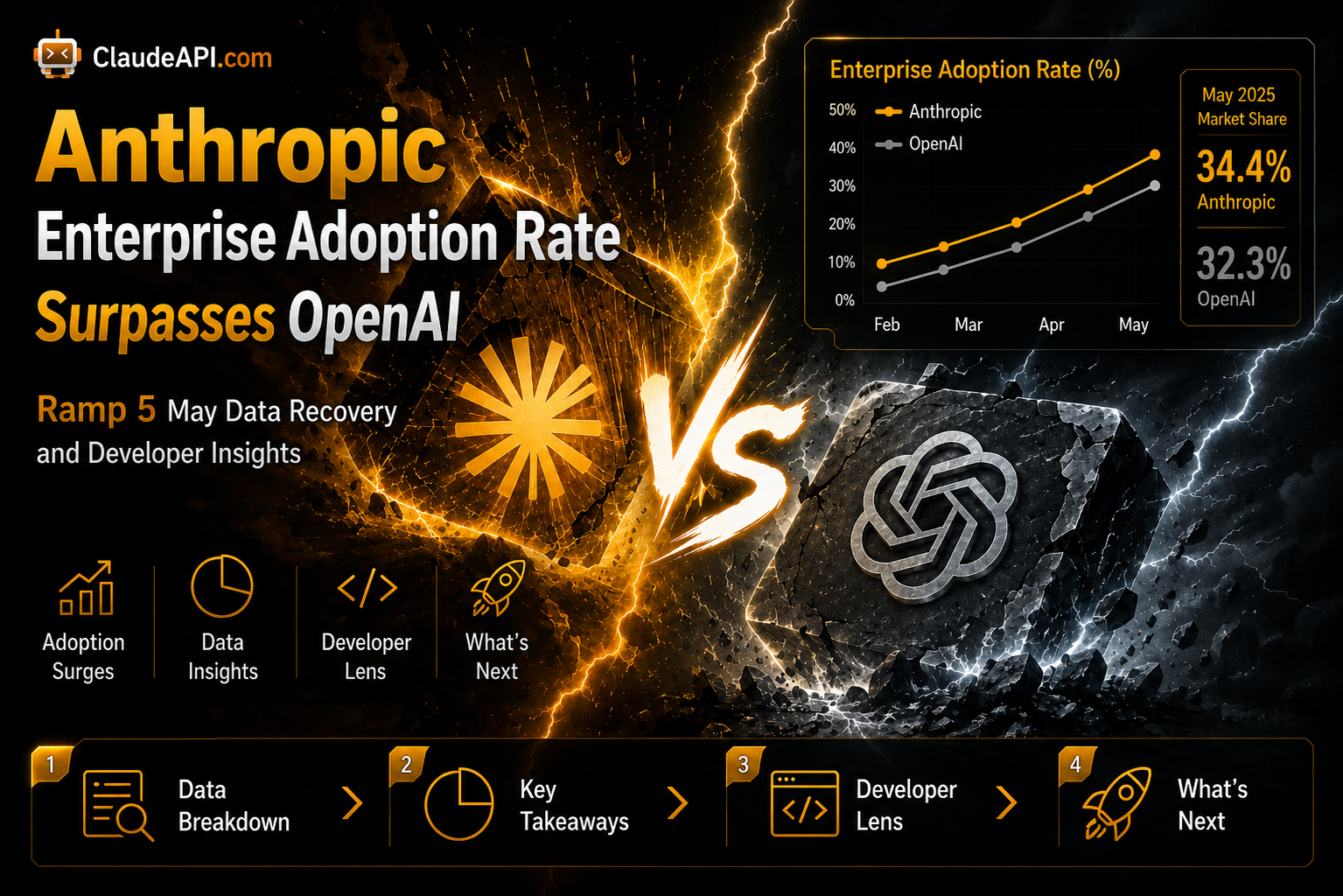
On May 13, 2026, corporate expense platform Ramp released the latest edition of its AI Index. A speculation that had been circulating for two years finally landed as hard data: Anthropic’s enterprise market penetration surpassed OpenAI for the first time — 34.4% vs 32.3%. This isn’t a subjective rating from some consulting firm — it’s based on real credit card transaction records covering approximately 50,000 U.S. businesses.
For developers building production systems on the Claude API, this milestone matters far more than “yet another benchmark score went up” — it means Claude is no longer a “niche pick for power users” but the model with the highest enterprise willingness to pay. This post breaks down the data, driving forces, risks, and implications for developers.
1. Key Numbers: Anthropic Up 4x in One Year, OpenAI Up 0.3%
Raw figures from Ramp’s May AI Index (full report):
| Metric | Anthropic | OpenAI |
|---|---|---|
| April 2026 enterprise adoption rate | 34.4% (MoM +3.8%) | 32.3% (MoM −2.9%) |
| Growth over past year | Approximately 4x (from 7.94% to 34.44%) | 0.3% |
| Starting point (June 2023) | 0.03% | ~30% |
| OpenAI peak | — | ~36.5% (mid-2025) |
Overall AI adoption across enterprises ticked up slightly to 50.6% — the pie barely grew, but Anthropic is taking OpenAI’s slice.
Ramp economist Ara Kharazian told TechCrunch: “This is a stunning reversal in the competitive landscape of AI model providers.” (TechCrunch coverage)
2. Not Just Ramp: Menlo Ventures’ 40% vs 27% Cross-Validates the Trend
A single data source always deserves skepticism. What makes this more convincing is that two reports with entirely different methodologies point to the same conclusion.
Menlo Ventures’ December 2025 State of Generative AI in the Enterprise surveyed nearly 500 U.S. enterprise decision-makers (full report):
| Player | 2023 enterprise LLM spend share | End of 2025 |
|---|---|---|
| Anthropic | 12% | 40% |
| OpenAI | 50% | 27% |
| 7% | 21% |
The three combined account for 88%.
Even more noteworthy for developers: Anthropic’s market share in coding use cases has reached 54% (OpenAI at 21%), up from 42% just six months prior — meaning coding is the primary battlefield where Anthropic is pulling ahead, and the growth is still accelerating. Menlo partner Deedy Das put it plainly: “Anthropic has dominated coding for 18 consecutive months — ever since Claude Sonnet 3.5 launched in June 2024, they haven’t given up the lead.”
Ramp measures “which company’s bills show up more,” Menlo measures “which company gets more LLM API spend,” and OpenRouter’s real-time rankings haven’t shown OpenAI overtaking Anthropic since December 2025. Three independent data sources reaching the same conclusion — this is not a one-time fluctuation.
3. There’s Only One Engine: Claude Code
The most frequently appearing keyword in Ramp’s report isn’t “Sonnet 4.6” or “Opus 4.7” — it’s Claude Code.
A few numbers that tell the story:
- Six months after launch, Claude Code alone hit $1 billion ARR; by February 2026, it had surpassed $2.5 billion ARR (source)
- An independent analysis estimated that 4% of all commits in public GitHub repositories are now written by Claude Code — double the figure from a month prior
- Uber’s CTO publicly stated: the company burned through its entire 2026 AI budget in four months, primarily on Claude Code and Cursor; per-engineer monthly API consumption runs $500–$2,000; Claude Code’s engineer adoption rate grew from 32% to 84%, and roughly 70% of committed code is now AI-generated
Ramp’s explanation is “deliberate customer segmentation”: Anthropic first captured finance, tech, and professional services — the industries with the highest technical density — then expanded outward. The side effect of this strategy: once an enterprise adopts Claude Code, engineers’ mental model shifts from “calling a model to solve problems” to “treating the model as a collaborator” — a form of stickiness that competitors find extremely difficult to match.
4. Three Hurdles Anthropic Still Faces
Kharazian candidly flagged three risks in the report. For teams deciding whether to bet their production environment on Claude, these demand honest assessment:
A. Per-Token Pricing → Incentive Misalignment
The more expensive the model Anthropic sells, the more they earn — creating an incentive to push users toward pricier models even when cheaper ones would suffice. Uber burning through a full year’s budget in four months is good news from the vendor’s perspective, but a warning from the customer’s.
Mitigation: Tiered model usage — simple classification/extraction on Haiku 4.5 ($0.80/M input), general conversation on Sonnet 4.6 ($3/M input), only truly complex reasoning/coding tasks on Opus 4.7 ($15/M input). With prompt caching, the cost of repeated system prompts drops by another 90%.
B. Product Quality Complaints
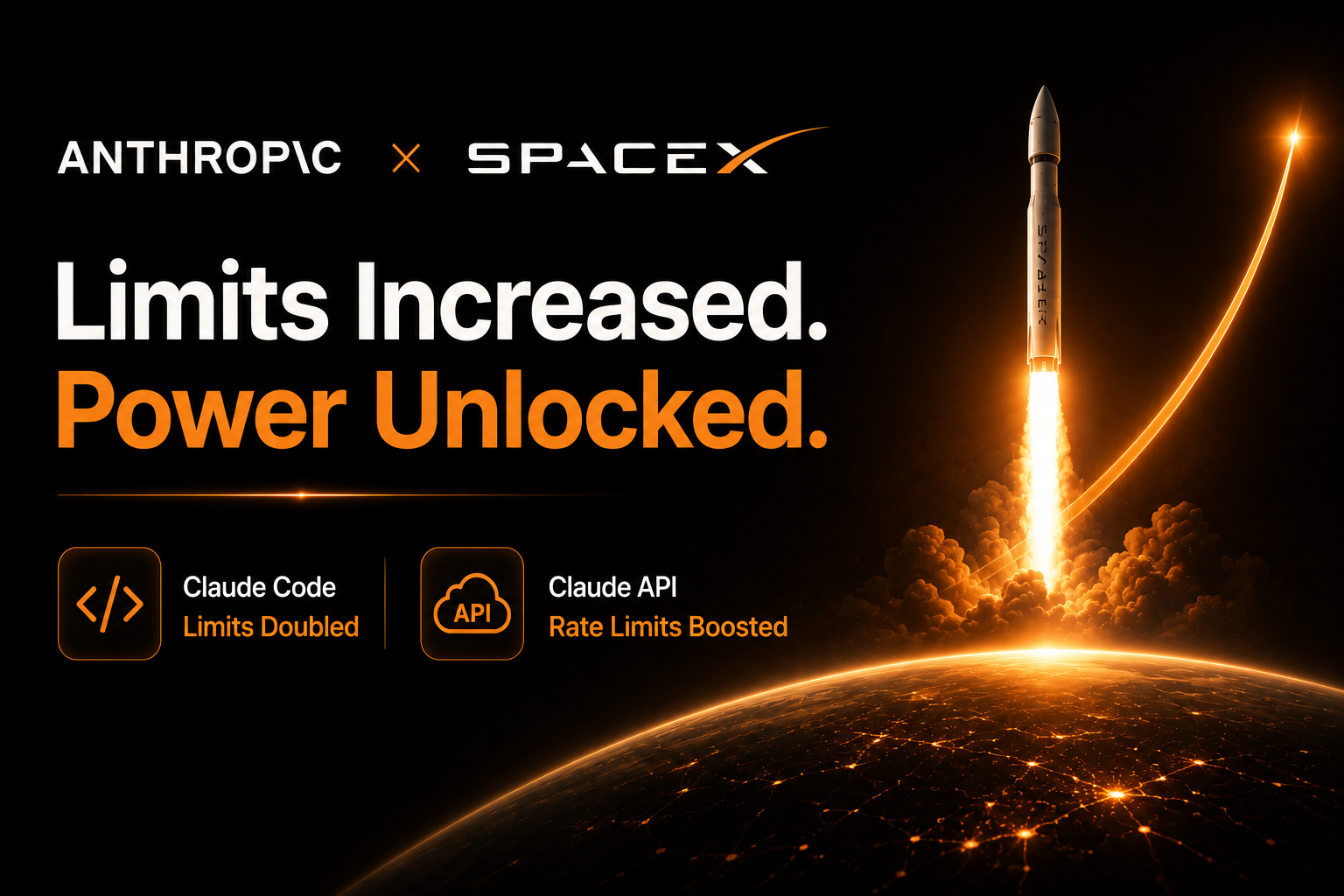
In recent weeks, user complaints about Claude have clustered around three issues: frequent outages, tighter rate limits, and degraded output quality. In April, Anthropic performed a full reset of all user usage limits and supplemented short-term compute capacity through a SpaceX partnership (earlier coverage).
This is especially relevant for users in certain regions — directly connecting to Anthropic’s official API can mean dealing with both upstream rate limiting and cross-border latency instability. This is precisely what gateway services like claudeapi.com address: a localized gateway layer that absorbs upstream rate fluctuations, providing developers with a stable, low-latency connection.
C. Compute Ceiling
Taking over Colossus 1 with its 220,000 H100/GB200 GPUs is only a short-term remedy. Long term, Anthropic is in the same compute queue as every other frontier model company. The practical implication for developers: don’t treat any single vendor as the sole dependency for your production environment — build dual-model redundancy for critical paths (Claude + fallback), and use intermediary services to isolate upstream account risks.
5. What This Means for Claude API Developers
Translating the data above into “what should I do”:
| Data Signal | Engineering Action |
|---|---|
| Claude’s 54% share in coding use cases | Migrate code generation, code review, and refactoring scripts to Sonnet 4.6 or Opus 4.7 — Cursor / Claude Code / Continue all natively support it |
| 70% of code is AI-generated | Build an “AI commit → automated testing → human review” pipeline; CI must pass before merge |
| Enterprise adoption reversal | Expand your resume / tech stack / team training focus from “knows GPT” to “knows Claude API” — especially tool use and prompt caching |
| Per-token pricing risk | Monitor per-engineer monthly API costs; auto-downgrade models above threshold, or switch to Batch API (another 50% cost reduction) |
If you haven’t connected to the Claude API yet, the simplest access method is via an Anthropic SDK-compatible gateway:
from anthropic import Anthropic

client = Anthropic(
    api_key="sk-your-key",
    base_url="https://gw.claudeapi.com",
)

resp = client.messages.create(
    model="claude-sonnet-4-6",
    max_tokens=1024,
    messages=[{"role": "user", "content": "Explain prompt caching"}],
)
print(resp.content[0].text)
from anthropic import Anthropic

client = Anthropic(
    api_key="sk-your-key",
    base_url="https://gw.claudeapi.com",
)

resp = client.messages.create(
    model="claude-sonnet-4-6",
    max_tokens=1024,
    messages=[{"role": "user", "content": "Explain prompt caching"}],
)
print(resp.content[0].text)
OpenAI-compatible path (migrate existing OpenAI SDK code directly):
from openai import OpenAI

client = OpenAI(
    api_key="sk-your-key",
    base_url="https://gw.claudeapi.com/v1",
)
from openai import OpenAI

client = OpenAI(
    api_key="sk-your-key",
    base_url="https://gw.claudeapi.com/v1",
)
One-line cURL verification:
curl https://gw.claudeapi.com/v1/messages \
  -H "x-api-key: sk-your-key" \
  -H "anthropic-version: 2023-06-01" \
  -H "content-type: application/json" \
  -d '{
    "model": "claude-sonnet-4-6",
    "max_tokens": 256,
    "messages": [{"role": "user", "content": "Hi"}]
  }'
curl https://gw.claudeapi.com/v1/messages \
  -H "x-api-key: sk-your-key" \
  -H "anthropic-version: 2023-06-01" \
  -H "content-type: application/json" \
  -d '{
    "model": "claude-sonnet-4-6",
    "max_tokens": 256,
    "messages": [{"role": "user", "content": "Hi"}]
  }'
Models and pricing currently supported by claudeapi.com:
| Model ID | Input | Output | Recommended Use Case |
|---|---|---|---|
claude-opus-4-7 |
$15/M tokens | $75/M tokens | Complex reasoning / architecture design / long context |
claude-sonnet-4-6 |
$3/M tokens | $15/M tokens | The sweet spot for 90% of use cases |
claude-haiku-4-5-20251001 |
$0.80/M tokens | $4/M tokens | Classification / extraction / customer service |
Sign up at console.claudeapi.com. New accounts receive trial credits — get up and running first, then decide whether to scale.
6. Conclusion: A One-Month Lead Isn’t a Moat — A One-Year Trend Is
Kharazian closed the report with this line: “In a fast-moving AI market, a one-month lead doesn’t yet constitute a moat.” — a statement that applies equally to bulls and bears.
But zoom out: Anthropic has held the top position in coding for 18 consecutive months, grown enterprise spend share from 12% to 40%, and taken Claude Code from zero to $1 billion ARR in six months. These aren’t explained by “a one-month lead.” If you’re choosing a model for your team’s next-generation tech stack, adding the Claude API to at least an equal-consideration shortlist alongside GPT is the bare minimum that May’s data demands.
The fastest path to getting started remains an API gateway. Sign up at claudeapi.com now — get your key in 5 minutes, run the three code snippets above, and take it from there. You know your use case better than any report does.
References
- Ramp AI Index May 2026
- TechCrunch: Anthropic now has more business customers than OpenAI
- Axios: Anthropic overtakes OpenAI in workplace AI adoption
- Menlo Ventures: 2025 State of Generative AI in the Enterprise
- The Paper: How did Anthropic surpass OpenAI on a $1 trillion trajectory?
- VentureBeat: 3 big threats could erase Anthropic’s lead