Why AI Compute Costs Keep Climbing — And What Anthropic’s Latest Pricing Changes Mean for Developers
In April 2026, Anthropic updated the pricing structure for enterprise Claude. For teams actively building on the Claude API, this isn’t just a routine price change — it reflects a deeper, industry-wide squeeze on AI compute resources. This post breaks down what changed, why it happened, and what you can do about it.
What Anthropic Actually Changed
Anthropic made three key adjustments to its enterprise Claude pricing in April 2026:
- Per-call API pricing: Claude Opus 4.6 holds its flagship position at $15/$75 per million tokens; Claude Sonnet 4.6 remains competitive at $3/$15 per million tokens
- Higher enterprise minimums:The floor for annual enterprise contracts has been raised
- Finer-grained volume tiers:A more detailed usage-based pricing structure, with deeper discounts unlocked at higher volumes
Here’s a summary of current model pricing:
| Model | Input Price | Output Price | Best For |
|---|---|---|---|
| Claude Opus 4.6 | $15/1M token | $75/1M token | Flagship — strongest reasoning |
| Claude Sonnet 4.6 | $3/1M token | $15/1M token | Mid-tier — best price-performance |
| Claude Haiku 4.5 | $0.80/1M token | $4/1M token | Lightweight — high-throughput tasks |
Prices above reflect Anthropic’s official rates (source: Anthropic.com, 2026-04-16). Actual rates when using ClaudeAPI may differ — check your dashboard for current pricing.
Why Anthropic Raised Prices
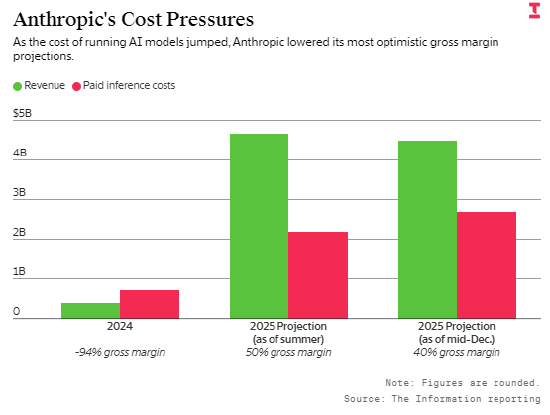
Compute Costs Are Genuinely Spiraling
The compute demand for training and serving large language models is growing exponentially. Claude Opus 4.6 represents a significant leap in reasoning capability — but that leap comes with a much larger cluster footprint and higher operational costs.
A few key factors driving this:
-
GPU supply remains constrained:GPU supply remains constrained
-
GPU supply remains constrained:GPU supply remains constrained
-
Safety research isn’t cheap:Anthropic’s core mission centers on AI safety, and investments in alignment research, red-teaming, and evaluation continue to grow
This Is an Industry-Wide Pattern
Anthropic isn’t alone. Since 2026, several clear trends have emerged across the AI API market:
| Trend | What It Means |
|---|---|
| Flagship model prices rising | Top-tier models now cost more than the previous generation |
| Lightweight models getting cheaper | Mid-range models (Haiku-class) are actually more affordable |
| Tiered pricing becoming standard | More customers can access lower per-unit rates at volume |
| Commitment discounts expanding | Annual usage commitments unlock meaningful discounts |
How Does Anthropic Stack Up Against the Competition?
Comparing flagship model pricing across providers puts Anthropic’s positioning in sharper focus:
| Provider | Flagship Model | Input Price | Output Price |
|---|---|---|---|
| Anthropic | Claude Opus 4.6 | $15/1M token | $75/1M token |
| OpenAI | GPT-4o | $2.50/1M token | $10/1M token |
| Gemini 2.5 Pro | $1.25-$10/1M token | $2.50-$10/1M token |
Competitor pricing sourced from each provider’s official pricing page, as of 2026-04-16.
Opus is clearly priced at a premium over rivals. That said, Sonnet 4.6 ($3/$15) sits in the same ballpark as GPT-4o ($2.50/$10) — which signals Anthropic’s broader strategy: push Opus upmarket as a reasoning-premium product, while keeping Sonnet competitive on price-performance.
Earlier this month, Anthropic also announced that Claude Code subscribers would be charged extra for using compute-heavy third-party agent tools like OpenClaw. Boris Cherny, Claude Code’s lead, posted on X: “Capacity is a resource we manage carefully. We’ll prioritize availability for first-party product and API customers.”
Who Does This Actually Affect?
Independent Developers & Small Teams
Impact Level: Low
If you’re using the API for prototyping, internal tools, or side projects with moderate monthly usage, this update barely moves the needle for you. Claude Sonnet 4.6 remains highly competitive and covers the vast majority of everyday development use cases.
Recommendations:
-
Default to Claude Sonnet 4.6 for day-to-day development — best price-to-performance ratio
-
Only reach for Opus when you genuinely need maximum reasoning depth
-
Use prompt caching to avoid recomputing repeated context and cut token spend
Mid-Size Teams(Monthly Spend: $1,000-$10,000)
Impact Level: Medium
The most immediate impact is the higher minimum commitment for Enterprise plans. If your team falls between the old and new thresholds, it may be time to reassess whether an Enterprise contract still makes sense.
Recommendations:
-
Audit your current API usage to identify high-consumption call patterns
-
Consider a tiered model strategy — route tasks across Opus, Sonnet, and Haiku based on complexity
-
Evaluate whether you qualify for the new enterprise tier; if not, pay-as-you-go may still be more cost-effective
Large Enterprises (Monthly Spend: $10,000+)
Impact Level: Medium-High — but manageable
Higher-volume customers feel per-unit price changes more acutely, but the expanded volume tiers also create more room to negotiate.
Recommendations:
-
Reach out to Anthropic or the ClaudeAPI team to explore custom pricing arrangements
-
Map out exactly which volume tier thresholds apply to your usage and plan accordingly
-
Invest in prompt engineering — every 10% reduction in wasted tokens translates directly to cost savings at this scale
If You’re Using ClaudeAPI — Here’s Your Edge
As a ClaudeAPI user, you have a few advantages worth leveraging:
- Unified multi-model management — Switch between models from the ClaudeAPI dashboard, picking the most cost-effective option for each use case
- Usage monitoring — Detailed consumption analytics help you spot which calls are burning through your budget
- Technical support — Hit a cost optimization wall? Reach out to platform support for tailored recommendations
5 Cost-Saving Actions You Can Take Right Now
- Audit your prompt length — Overly long system prompts are common. Trimming them to the essentials can cut input token usage by 30–50%
- Enable prompt caching — Cache repeated system prompts so you’re not billed for the same context on every call
- Test model downgrading — Run your current Opus use cases on Sonnet first. You may find Sonnet handles more than you expect
- Set
max_tokens— Cap output length to prevent the model from generating unnecessarily long responses - Use Batch API for async tasks — Any non-realtime workload processed via Batch API costs 50% less than standard calls
Where Is AI API Pricing Headed?
Flagship model compute costs won’t drop sharply in the near term — but the medium-to-long-term outlook has some encouraging signals:
- Inference optimization is advancing fast— Quantization, distillation, and speculative decoding are improving efficiency with each generation
- Chip supply is improving— As TSMC and Intel scale up production, GPU pricing should gradually ease
- Competitive pressure keeps mid-tier models affordable— Providers can’t afford to lose the middle market
This pricing update is another signal that Anthropic is solidifying its position as a premium enterprise AI vendor. For developers, the most practical response isn’t to wait for prices to drop — it’s to build a model-tiering architecture now, so you can adapt quickly regardless of where pricing goes next.
FAQ
Q: Will ClaudeAPI prices change in line with Anthropic’s official updates? A: ClaudeAPI maintains its own pricing strategy, independent of Anthropic’s list prices. Always check the ClaudeAPI dashboard for current rates.
Q: My project runs great on Opus 4.6 — do I need to switch? A: Not necessarily. If costs are within budget and results are solid, don’t change things. The first optimization step is trimming prompts and enabling caching — that’ll likely deliver more immediate savings than switching models.
Q: Should small teams use Claude Sonnet or Opus? A: Start with Sonnet 4.6 for the majority of use cases. It performs exceptionally well on code generation, text summarization, and conversational tasks — at roughly 1/5 the cost of Opus. Only step up to Opus when your workload genuinely demands complex multi-step reasoning or deep long-document analysis.
Want more tips on getting the most out of the Claude API while keeping costs under control? Visit ClaudeAPI for the latest tutorials, guides, and tools.